I had so much fun with this project this week! The idea to create these mocktails came straight from you, our lovely community. You inspire me and our content daily, and when I reviewed our “recipe makeover” list, I realized we tackled 34 of your requests last year! (Find them all in this recipe index.)
One request that came through loud and clear in recent DMs and comments this week was better mocktail options! Whether you’re doing Dry January, cutting back on alcohol for metabolic health, or simply choosing not to drink, you deserve something more sophisticated than sparkling water with a lime wedge.
I used to love an occasional glass of wine, until menopause changed everything. Even one glass began to disrupt my sleep so noticeably that it stopped feeling worth it. Wearing my Oura ring made this impossible to ignore. I could see exactly how alcohol affected my deep sleep, REM cycles, and overnight heart rate variability. Even when I felt fine going to bed, the data told a different story: that glass of wine was most definitely sabotaging my recovery.
Sleep is only part of the story. Alcohol also disrupts blood sugar, stresses the liver, interferes with fat metabolism, and increases inflammation. For those of us navigating perimenopause, menopause, insulin resistance, or metabolic health goals, reducing (or eliminating) alcohol can be truly transformative.

What You’ll Get Today:
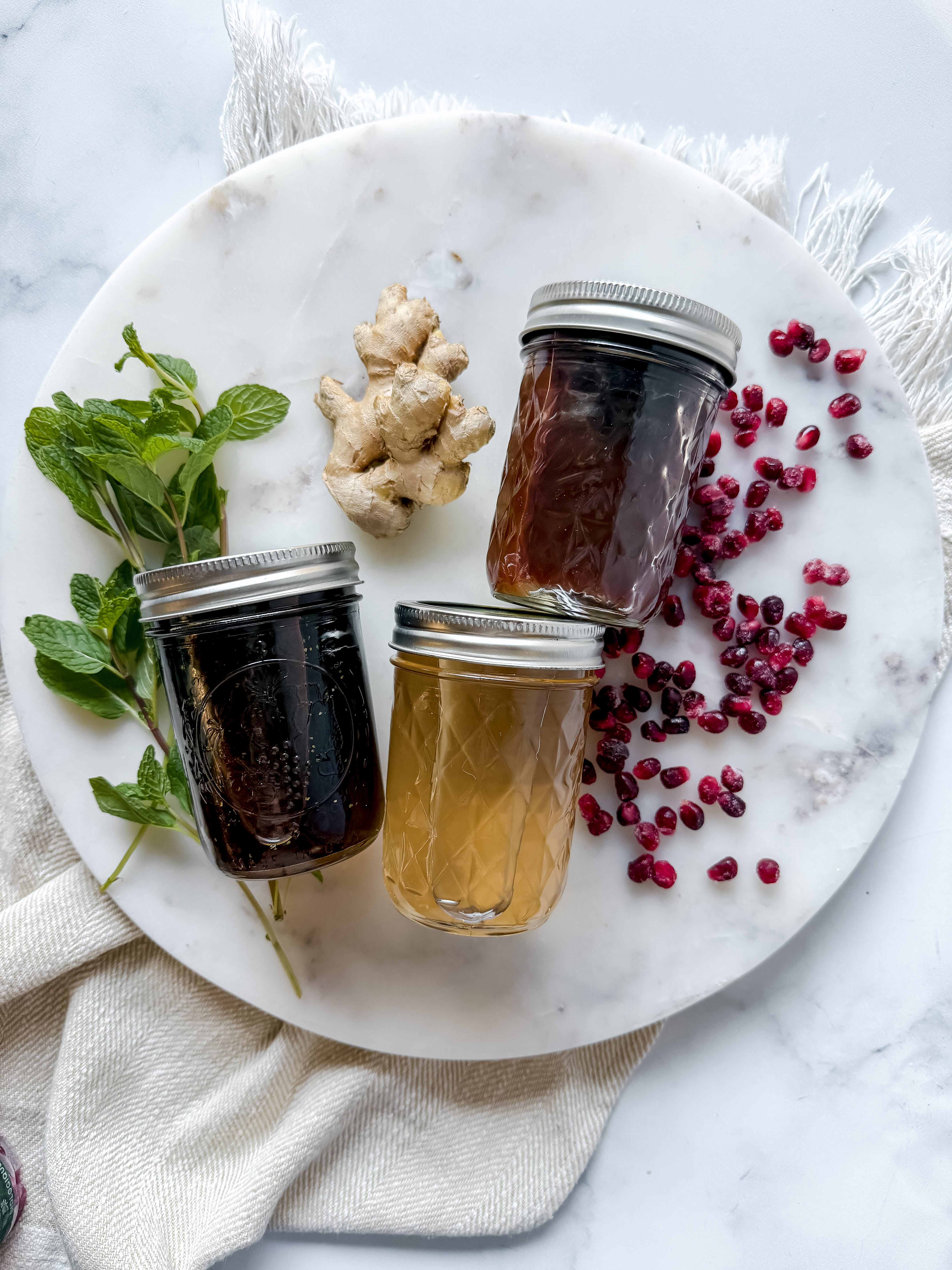
3 blood sugar-friendly syrups (mint, ginger, + pomegranate) in a printable download
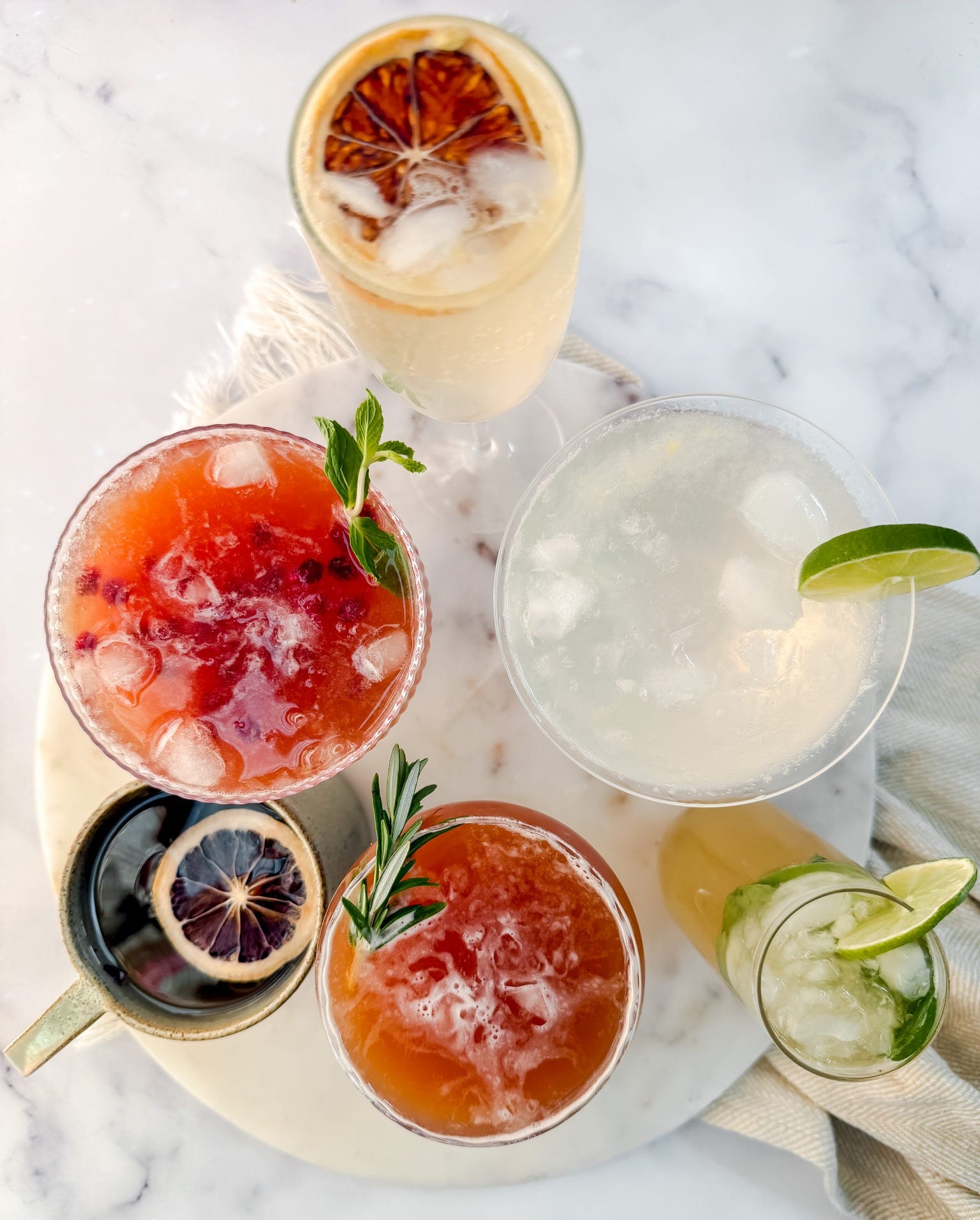
6 sophisticated mocktails using those syrups (classic mint mojito, ginger lemon sparkler, pomegranate mint fizz, spiced ginger hot toddy, ginger ale, and pomegranate ginger sparkler) in a printable download
Tips for making this easy and delicious!
The Problem with Most Mocktails
Here’s the truth: most mocktails are just sugar bombs.
Juices, simple syrups, and tonic water are often loaded with sugar and high fructose corn syrup. They may be alcohol free, but they can wreak havoc on your blood sugar just as quickly as a cocktail.
Alcohol-free doesn’t automatically mean blood sugar friendly.
But what if you could enjoy beautiful, flavorful, grown-up drinks that actually support your metabolic health?
That’s exactly what these herbal mocktails deliver.
Why Herbs Make the Perfect Mocktail Base
Herbs and spices offer complex flavor, therapeutic benefits, and zero blood sugar impact.
Some of my favorites:
Mint – cooling, digestive support
Basil – anti-inflammatory, calming
Rosemary – antioxidant-rich, supports brain health
Ginger – anti-inflammatory, digestive support
Lemongrass – bright, citrusy, calming
Hibiscus – tart, floral, supports cardiovascular health
Thyme – antimicrobial, respiratory support
Holy basil (Tulsi) – adaptogenic, stress-reducing
Unlike fruit juices and sweetened syrups, herbs provide depth and interest without spiking glucose.

The Secret: Blood Sugar-Friendly Sweeteners
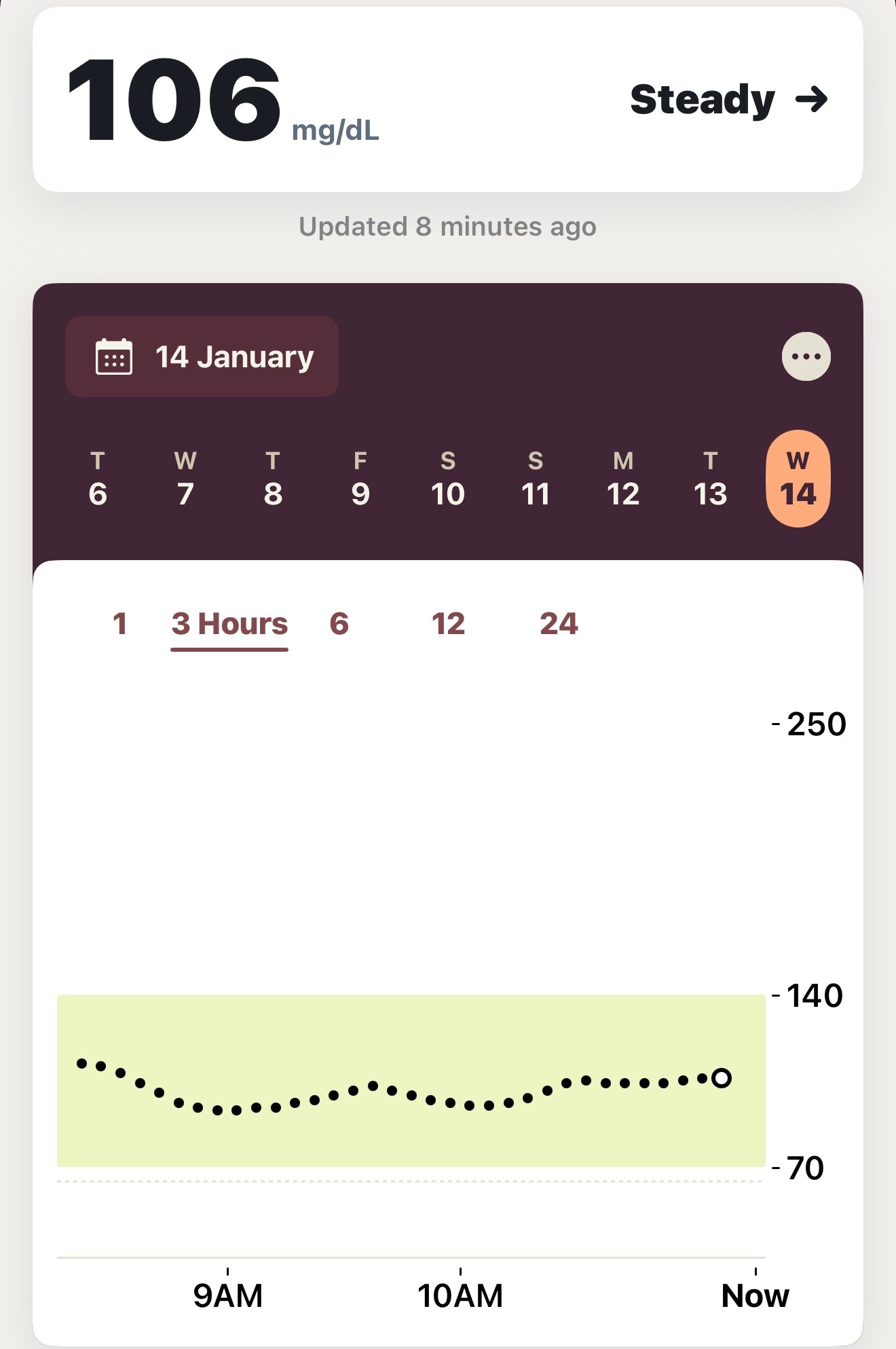
Before the holidays, I took an herbal bitters class taught by herbalist Kim La Vere at Gather, a gathering space and shop near my home. In the class, we used glycerin to extract beneficial compounds from herbs and spices. I was curious about how it would affect my blood sugar, so I tested it on my CGM and was pleasantly surprised to see it didn’t spike my glucose. After that experience, I figured glycerin would be perfect for our blood sugar friendly mocktail syrups today!
What is glycerin? Vegetable glycerin is a clear, sweet liquid derived from plant oils like coconut, soy, or palm. It’s produced through a process that separates the glycerin molecule from fatty acids using heat and pressure. While it tastes sweet, it’s not metabolized by the body like sugar, which is why it doesn’t spike blood sugar the same way. For the highest quality, look for organic, non-GMO vegetable glycerin.
Other blood sugar-friendly sweetener options for today’s syrups:
Allulose – Tastes like sugar, doesn’t raise blood sugar, can even lower blood sugar
Monk fruit allulose blend – My personal favorite blood sugar friendly sweetener
You can use any of these 3 to create herbal syrups, just like we did in last month’s 10 coffee syrups post.
Want to learn more about making glycerites? For detailed information on the traditional glycerite method, visit the Mountain Rose Herbs blog (also a great source for organic herbs, teas, and glycerin!)